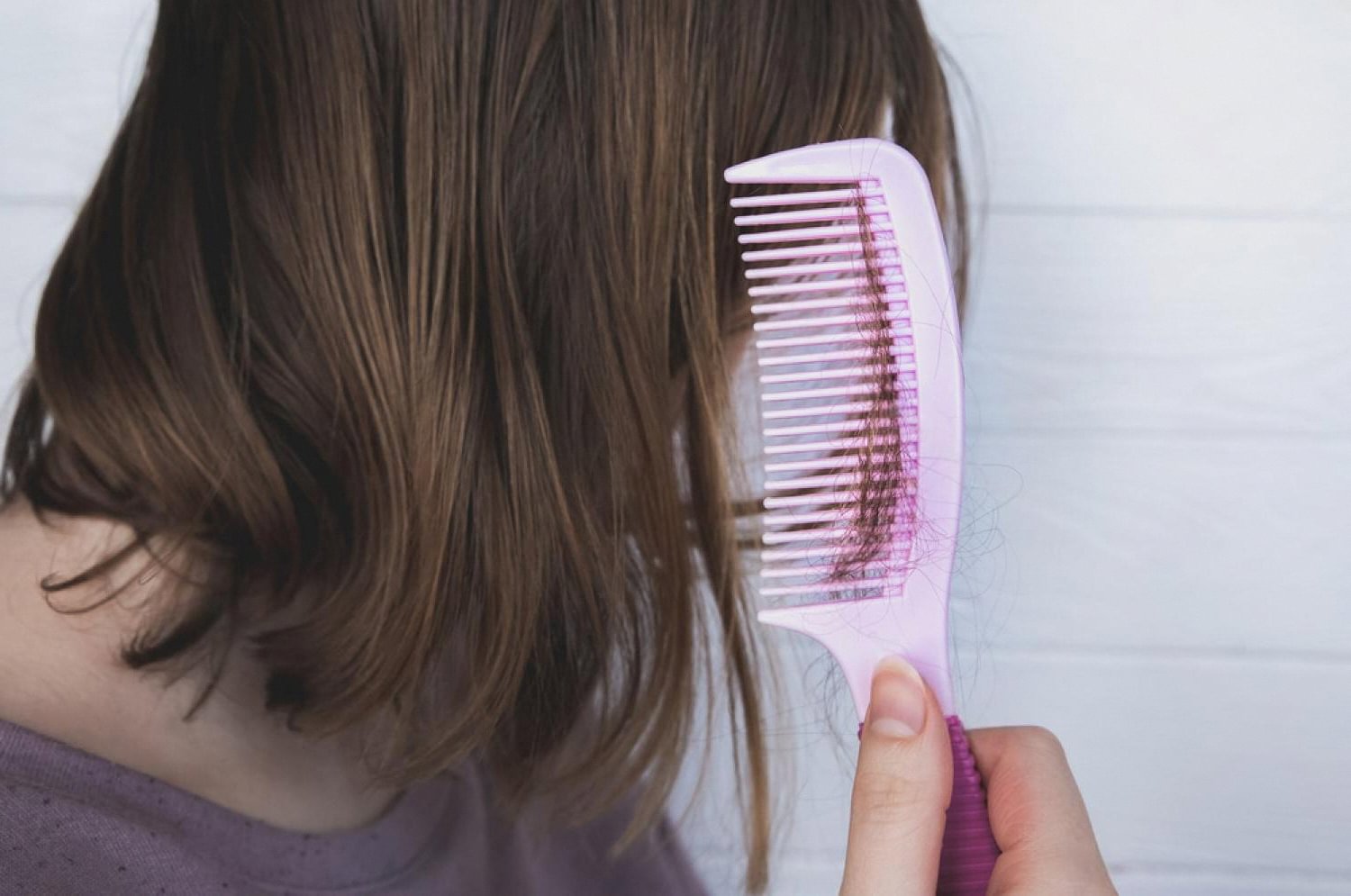
Sara noticed it in the shower first. A small clump around the drain, then a bigger one the next day, then handfuls when she brushed her hair in the mirror. Everyone she asked said the same thing: it’s stress, don’t worry about it. She lives in Dubai, works in marketing, drinks a lot of coffee. Of course it’s stress. Six months later, with a visibly thinner ponytail and no improvement, she finally saw a doctor. It wasn’t stress. Her ferritin was in the floor and her thyroid was off. Two blood tests, two answers.
This story is not rare. Stress is real and it can shed hair, but it gets blamed for a lot of things it didn’t do. If your hair has been falling out for more than three months, there is almost always a medical reason worth checking, and most of them are fixable once you know what you’re dealing with.
What normal shedding looks like, and when it isn’t normal
Everyone loses hair every day. The usual number is around 50 to 100 strands, according to the American Academy of Dermatology. You see it on your pillow, in the shower, on your clothes. That’s the normal turnover of a healthy scalp.
The problem starts when you notice more hair on the brush than usual for weeks in a row, when your parting looks wider, when your ponytail feels thinner between your fingers, or when you can suddenly see scalp under bright light. That’s a signal, not a mood. And in the UAE, where hard water, chlorinated pools, sun exposure and long summers indoors on aircon all pile on top of each other, it’s easy to blame the environment and miss the real cause underneath.
The scan that changed her mind
When Sara finally sat down at a clinic, the doctor did something simple. She looked at the scalp under a lit magnifier and pulled about 40 strands gently between her fingers. More than six came out. That’s called a positive pull test, and it means active shedding. Then came blood work: ferritin, vitamin D, TSH, B12, and a hormonal panel. The whole visit took under an hour.

This is the part most people skip. They try new shampoos, biotin gummies, scalp oils, castor oil masks, and expensive serums for months before anyone actually looks at what their body is doing. If you’ve been shedding for a while, get the blood work done first. Everything else is guessing.
The 12 medical reasons that usually turn up
Below are the causes doctors most often find when someone walks in with a shedding problem. None of these are exotic. Any GP or dermatologist at a good aesthetic clinic dubai can screen for the top ones in a single appointment.
Iron deficiency
Low ferritin is the number one cause in women, especially with heavy periods or a low-meat diet. You can be non-anemic and still have iron too low for your hair.
Thyroid problems
Both underactive and overactive thyroid make hair thin out. A simple TSH test catches most of it.
Vitamin D deficiency
Very common in the UAE despite the sunshine, because most people stay indoors or fully covered. Low levels are strongly linked to shedding.
Post-pregnancy shedding
Hormones drop hard around 3 months after giving birth. Hair falls in clumps for a few months, then usually recovers on its own.
PCOS and hormones
Extra androgens can thin hair on the crown and widen the parting. Common and often undiagnosed.
Crash dieting
Sudden weight loss or very low-calorie diets shock the follicles. Hair often falls out 2 to 3 months later.
Protein shortfall
Hair is basically protein. If you eat too little of it, your body cuts hair growth first to save resources.
Medication side effects
Blood pressure pills, antidepressants, acne drugs like isotretinoin, and some contraceptives can all cause shedding.
Genetic (androgenetic)
Pattern hair loss runs in families. It shows up slowly, usually at the temples in men and the crown in women.
Recent illness or surgery
Any big stressor on the body, high fever, COVID, surgery, or infection, can trigger shedding 2 to 4 months later.
Scalp conditions
Fungal infections, seborrheic dermatitis, or psoriasis on the scalp interrupt normal growth. Itching and flaking are the clues.
Traction from styling
Tight buns, hair extensions, and repeated keratin or bleach treatments pull hair out at the roots. Very common in the region.
What actually helps
- Get blood work first. Ferritin, TSH, vitamin D, B12, and a hormonal panel if you’re a woman. Everything else waits until you have numbers.
- Fix the deficiency, not the symptom. Biotin supplements do very little unless you’re actually low. Iron and vitamin D correction can take 3 to 6 months to show in the mirror.
- Ease up on styling. Loose ponytails, fewer heat tools, no back-to-back chemical treatments. Give the follicles a break.
- See a dermatologist if it’s been more than 6 months. Persistent shedding beyond that timeline usually needs a proper diagnosis, not another shampoo.
Hair grows back slowly. Even after you fix the cause, expect three months before you see baby hairs and closer to a year before density recovers. That’s not a failure of treatment. That’s just how the hair cycle works.
Frequently asked questions
How much hair loss per day is normal?
Between 50 and 100 strands a day is considered normal shedding. If you’re seeing visibly more on the pillow, in the shower drain, or in the brush for several weeks in a row, that’s when it moves from normal to something worth checking.
Is hair loss in the UAE worse because of the water?
Hard water and chlorine can make hair feel rougher, more brittle, and harder to manage, but they don’t usually cause hair to fall out at the root. If strands are breaking mid-length, that’s a water and styling issue. If they’re coming out with the bulb attached, it’s a medical issue and worth investigating properly.
Can vitamin D deficiency really cause hair loss in a sunny country?
Yes, and it’s one of the most common findings. Even with year-round sun in the UAE, most people spend the day indoors, wear covered clothing, or avoid the sun during peak hours. A simple blood test tells you where you stand. Correcting a low level often takes a few months of supplementation before hair growth responds.
How long after starting treatment will I see regrowth?
Plan for at least three months before you see new short hairs coming in, and six to twelve months before overall density improves. The hair growth cycle is slow. If someone promises faster results than that, be cautious.
Do biotin supplements work for hair loss?
Only if you’re actually deficient in biotin, which is rare. For most people, biotin supplements do nothing measurable for hair. Iron, vitamin D, protein intake, and correcting thyroid issues have far more impact when those are the root cause.
When should I see a doctor about my hair falling out?
If shedding has been going on for more than three months, if you can see scalp where you couldn’t before, if your parting is widening, or if you notice patches of complete hair loss, book an appointment. A dermatologist or GP can run the basic panel and give you a real answer within a couple of visits.
Will hair grow back after pregnancy-related shedding?
In most cases, yes. Postpartum shedding usually starts around three months after birth, peaks at four to six months, and settles on its own within a year. If it hasn’t stabilised by 12 months postpartum, that’s worth investigating because iron and thyroid problems are also common after pregnancy.

Hockey fan, doer, hiphop head, Mad Men fan and HTML5 Guru. Operating at the nexus of minimalism and elegance to develop visual solutions that inform and persuade. Check me out on Dribbble or Medium.